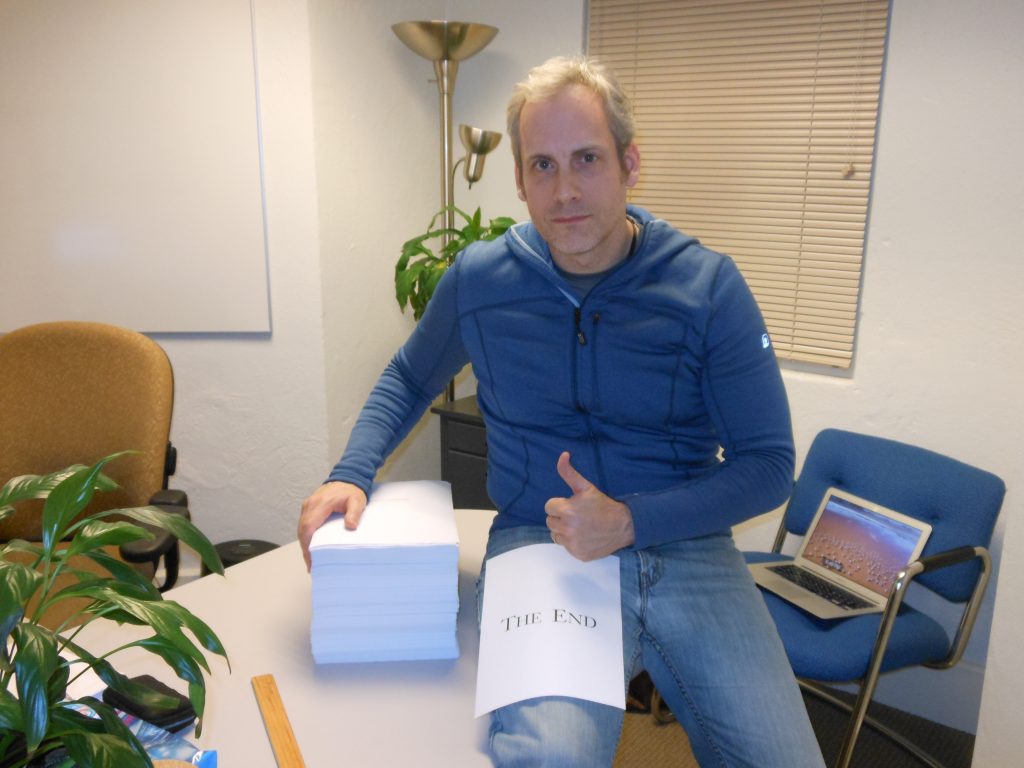
 Back in December, after having completed the first draft of a 550,000-word, 1,600-page novel, I took a nearly month-long vacation (my first in years). For one week of the vacation, my wife and I explored Quebec, stayed at at a ski resort, and went cross-country skiing, swimming and hot-tubbing every day.
One afternoon in the hotel room, I watched a New England Patriots game, a game in which quarterback Tom Brady, once again, led the Patriots from behind in the fourth quarter to win.
As a Patriots fan, I of course found the game exciting, but I was particularly taken by something one of the commentators said after the game. He remarked how Tom Brady had recently revealed that the reason he was so successful—even now, at age 40 (ancient for NFL QBs)—was that he didn’t approach his being a quarterback as a mere job, but rather a lifestyle. Everything in his life, every decision, is in service to his overarching life goal: to become the best quarterback he can be (which has arguably already made him the best in the history of the game).
Brady’s statement really resonated with me because about a year ago, I came to a similar conclusion about being a novelist. I realized that in order to become the best novelist I was capable of becoming, I had to make everything else in my life subservient to, and in service of, my writing.
The summer before, in June 2016, during a 3-week sojourn in the Green Mountains of Vermont, I had already decided that, at age 46, I had to be a miser with my time; I now only had time for essentials. But last February I extended and refined this thinking to include other aspects of my life, particularly my nutrition and fitness. I began a strict vegetarian (some fish), no-sugar, no-alcohol nutrition plan, and a fitness regimen that included swimming, strength training, cardio, mountain climbing and cross-country skiing. And for the entire year (save my vacation in December), I was religious about this program.
But when I heard Tom Brady’s statement about how being a quarterback is a lifestyle, and then when I saw him win his 8th AFC Championship last Sunday, I knew that I now want to apply my own version of Brady’s TB12 lifestyle method to my life as a novelist, where everything in my life will be in service to my writing. Put another way, anything that will hinder my becoming the best novelist I can be will be curtailed or outright eliminated from my life. Following are the 5 key areas in which I am making changes:
1. Health/Nutrition/Fitness. Writing novels is a marathon (and in the case of my latest, epic-length work, super marathon) activity. It requires bodily endurance to write 1,500–3,000 words a day for months and years on end. So with this in mind, I plan to continue my nutrition and fitness program, adding to it this year improved dental care, increased dietary supplements and more restful sleep.
2. Low-tech writing. For 25 years I’ve written the majority of my first drafts either on a typewriter or in longhand, then re-typed them into a computer. Last year, however, because of the overwhelming length of the epic novel, I wrote most of the first draft on my Macbook Air. Consequently, I missed the calming, meditative, ruminative benefits that come from my usual low-tech method of working.
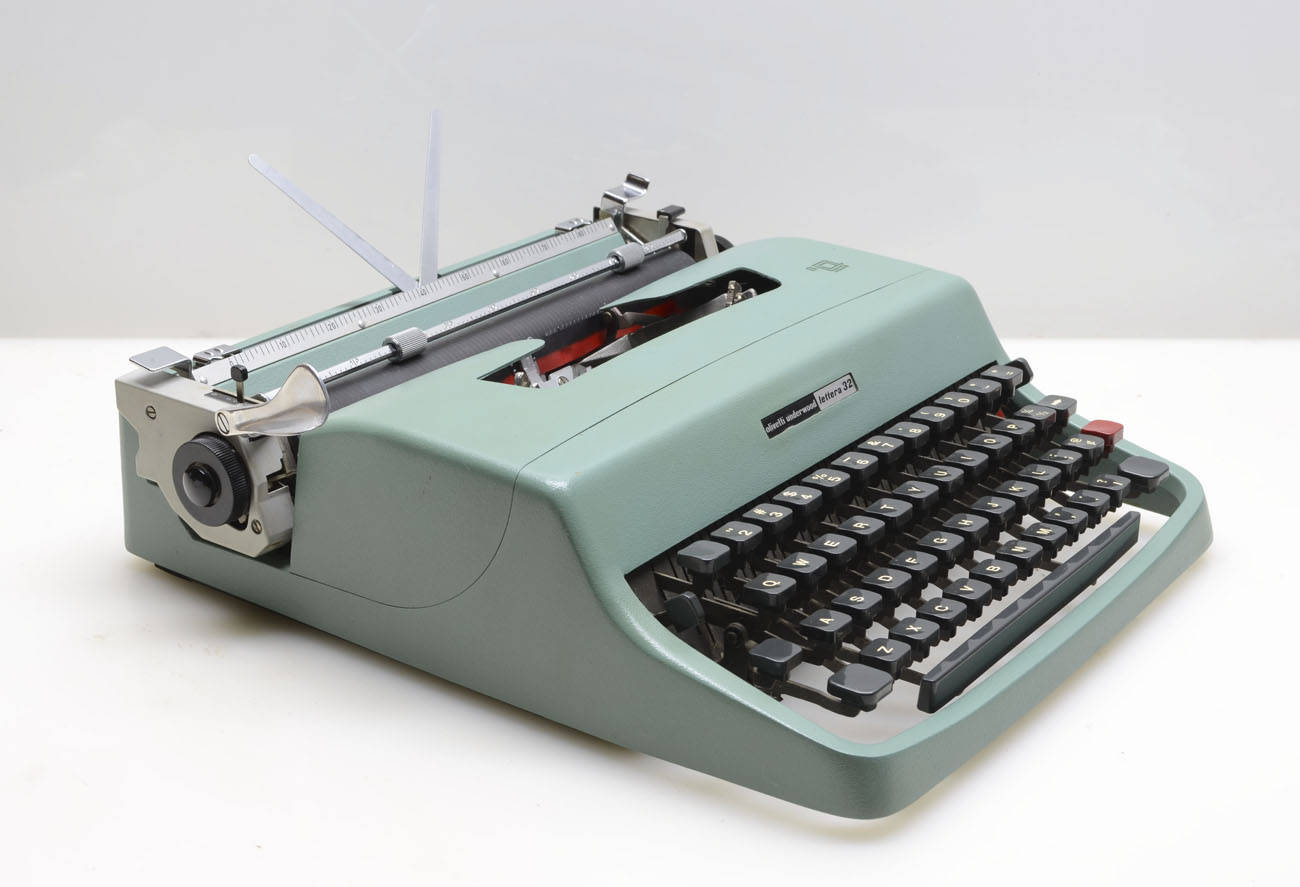
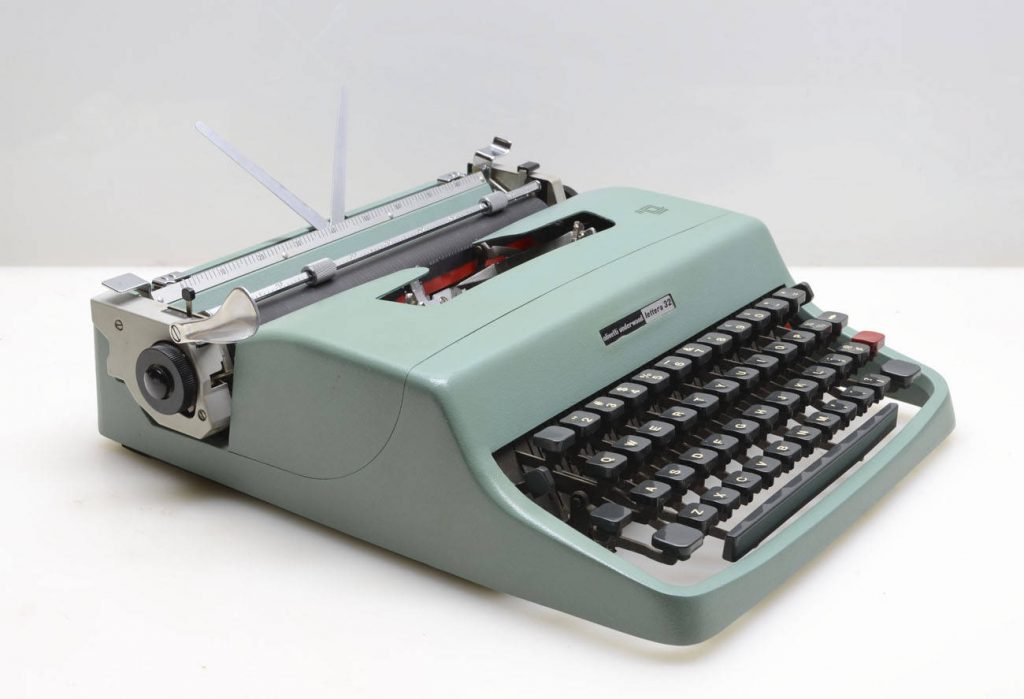
To remedy this, I recently ordered a new manual typewriter, a 1968 Olivetti Lettera 32 (reputedly the fastest manual typewriter ever made), and I’m going to write all of my first drafts on it, or in longhand. Incidentally, the Lettera 32 was also the chosen typewriter of two writers I’ve long admired, Cormac McCarthy and John Cheever.
3. Social media and the Internet in general. Last October, after a solid 6–7 months away from it, I returned to social media to promote my latest book, Perpetuating Trouble. I spent most of October through December actively “engaging with” SM and advertising the book using what I thought was a clever, attention-getting campaign. I came to the conclusion once and for all that, if you’re a serious writer, SM is a complete waste of time. In the future, I decided, I will be putting my time toward improving my writing.
I also discovered that weeks of exposure to SM and the Internet in general had made me irritable and had wasted countless hours of my time. I resolved that from now on I would only post on SM if I had major news to report, or if I was releasing a new book. And I would only go on the Internet once a week or so to check email and to research items from a list I’d be keeping during my writing sessions.
Interestingly, about a week ago I started rereading Henry David Thoreau’s Walden for the tenth time in my life, and I came upon this quote: “Our inventions are wont to be pretty toys, which distract our attention from serious things.” He wrote that in 1845 regarding the then-new invention of the telegraph, but he could just as easily have written it last year, regarding SM and smartphones.
4. More isolation. Early in January 2018, I saw the recent documentary California Typewriter. In it, the late, great playwright Sam Shepard said something that made me rethink an aspect of the writing life that I’ve found myself discontented with on and off over the years.
Shepard said, “I feel my great strength as a writer is being alone. Aloneness is a condition of writing. You look at all the writers that have come up with something worth its own salt, and they’re utterly alone.”
When he said this, I realized that the loneliness and isolation I feel on a daily basis are a strength, and that they’re the gantlet I have to be willing to pass through in order to write something great. I also noted that Shepard joked that he didn’t even know how to use the “new technology,” like SM or smartphones. “Here,” I said to myself, “is a Pulitzer-winning playwright who simply wrote and didn’t allow himself to be distracted or derailed by the next ‘shiny thing’—a new ‘time-saving’ app or online anything.”
5. Leisure time and media consumption. In both of these areas, my new question to myself is, “Will spending my leisure time doing this activity, reading this book or watching this film/TV show help me to become the best writer I can be? Or is it going to be a wasteful distraction?”
To some, my plan to make everything in my life subservient to my writing might seem draconian, but I’ve been writing for 25 years, and I’ve learned what works for me and what doesn’t. The plan might not work for other writers (particularly aspiring ones), but I know I possess the self-discipline necessary to put a plan like this into place. Next year, I’ll write a follow-up entry to evaluate how my new plan went.