About One Hundred Miles from Manhattan
 One of IndieReader’s Best Books of 2014.
One Hundred Miles from Manhattan is a novel about an upscale rural community—Wellington, NY—where the hills and the seemingly quaint village conceal lives of love, lust, adultery, tragedy and small wars.
Unlike other novels in the pastoral tradition, which attempt to tell the story of a place and a time through the eyes of a single character, this modern novel uses 10 narrators, a different one per chapter, to shed light on this exclusive community.
In Wellington, a trophy wife undergoes a shocking transformation. A medical doctor attracts his own destruction. A local bachelor steals a dog and has an epiphany. A town Casanova goes on a personal odyssey to make amends. And a Manhattan book editor reveals what it’s like to be a first-time visitor to this rarefied world of wealth, horses and equestriennes.
To this exquisitely written novel, Chris Orcutt brings his meticulous craft and his talent for writing in multifarious voices and styles—all while exposing a world of massive estates, rolling green hills, hilltoppers, townies, celebrities, hopes, dreams, sex, and the fleeting promises of love…
Buy: Amazon
Excerpt from One Hundred Miles from Manhattan
Although I’d had several authors from Wellington over the years, including a former editor pal turned bestselling mystery novelist, not one of them had deigned to invite me to so much as a cocktail party up here. Creeping through the village that Saturday morning in a rental car, I passed a shiny aluminum diner and myriad antiques dealers and continued on through a hamlet mysteriously called Rabbitsville (although I didn’t see a single rabbit to warrant the name). From there, I followed sandwich boards pointing to Fox Hill.
The road ribboned out in front of me, over rolling green hills and miles of black wooden fence. The sky was a soft summer blue. In the hollows, pockets of thin fog hovered over the grass. The whole countryside had a vaguely mystical aura, like Mr. Darcy’s Derbyshire.
Most of the drive from Manhattan, however, had been tedious. Droning along the empty and wooded Taconic Parkway, still half-asleep, I had started to question the wisdom of traveling two hours upstate for a young woman with whom I had done nothing but have inordinate sex—and that only in her favored cowgirl position. To be fair, we had managed to squeeze in a few substantial conversations—about books (for a young woman of prodigious sexual appetites she was surprisingly well-read, Chekhov’s stories being her favorites); about technology (she embraced the useful, citing her automatic lights and a robotic vacuum cleaner that perpetually crawled around the apartment); and about lifestyles (she adored simplicity bordering on the Spartan; every room in her apartment contained minimal furniture and absolutely no knickknacks)—but since those conversations invariably took place before or after sex, I considered them suspect, and not representative of how we would relate under less sybaritic circumstances. For that reason, the weekend was a test, or, as she had put it, “a trial run for us.”
A Reading from the Novel
The following reading was performed at the Millbrook Literary Festival in June 2014. The Millbrook, NY countryside was one of the inspirations for the novel.
What do you mean by the term “modern novel”?
I call it a “modern novel” for a couple of reasons. First, the novel is told by 10 different narrators, one per chapter. Second, the timeline is segmented.
For example, in the movie Pulp Fiction, the story is chopped up and the scenes are presented out of order. That’s what I do with this novel. It’s the story of one year in Wellington, but the events are presented out of order. The book starts with a chapter that begins in the late spring/early summer, then goes to the early spring, then mid-summer, etc. It is not in chronological order.
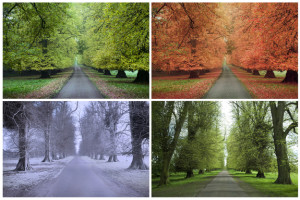
I felt that this would enhance the reader’s experience because s/he would read of a fall event early in the book, then, later in the book, during another chapter that takes place in the fall, s/he would have that event to look for or to reflect on.
With each chapter, we see a small part of Wellington through that character’s eyes. Many characters overlap between the chapters, and so do the events. The POV characters include a trophy wife, a medical doctor, a single mother, a contractor/local Casanova, and a Manhattan book editor.
Why have 10 different narrators or points of view?
As much as I admire the single POV novel—e.g., Pride & Prejudice, The Catcher in the Rye, and The Great Gatsby—in today’s ultramodern society, where everyone is a star (or considers himself one; e.g., Facebook, Instagram, Twitter, Snapchat), everyone’s story or POV contributes to the story as a whole. Nowadays, it doesn’t make sense that any one person would be capable of telling the complete story of a town.
How is Wellington unique?
Actually, I don’t think Wellington is unique (definition: “being the only one of its kind; unlike anything else”) as much as it’s iconic or symbolic.

Photo by Les Haines. *See credits at bottom.
There are lots of wealthy communities out there with big estates, rolling green hills, country clubs, people driving Range Rovers, exclusive rod and gun clubs, pheasant farms, a lively but mostly unnoticed equestrian scene, and a low simmering of conflict between hilltoppers and townies. Wellington is meant to be an amalgamation of several of those places, and it’s also meant to be more of an idea than an actual place—mythical, if you will.
Imagine if the world of Mr. Darcy’s Derbyshire could be transplanted to modern-day Upstate New York. That’s Wellington.
What was your inspiration for the novel?
I first got this idea of writing a novel about a wealthy community over 20 years ago, when I was a reporter in Millbrook, NY. But at the time, I could only envision the story being told from the POV of the local reporter. I’m so glad that I waited to write this book, because I think that the use of 10 narrators gives the reader a richer, broader experience of the town, and because back when I was a reporter, my writing skills weren’t even close to what they are now.
I was also deeply inspired by my favorite classic authors of pastoral fiction including Chekhov, Tolstoy, Hardy and Austen.
* The author has permission and/or Creative Commons rights to use the following photos from Flickr on the cover of this book: “Hunters Wellies CARNABY BOA…” and “Turquoise and Brass Earrings and Necklaces…” by Maegan Tintari; “DSC_1255” (the fox hunt) by Bethany; “Fall Foliage” by Kimberly Vardeman; “Rape Seed Field” by Les Haines; “Mansion on a Hill” by Lucas Wihlborg; “Just a Perfect Day” by Alison Christine. The photo “Wellington Sign” is by Karen Kruschka.